
Time Travel
The people built great cities to house open-minded scientists and artists in search of Truth, a celebration of advancements socially and scientifically (Pollard, 2010). Cleopatra the Alchemist lived in the city of Alexandria during this time, the last remarkable period of its history. She was one of four female alchemists who worked on producing the famous Philosopher's Stone (Klimczak, 2017), and some of her most precious discoveries are included in the mysterious Chrysopoeia of Cleopatra (Chrysopoea of Cleopatra, n.d.).
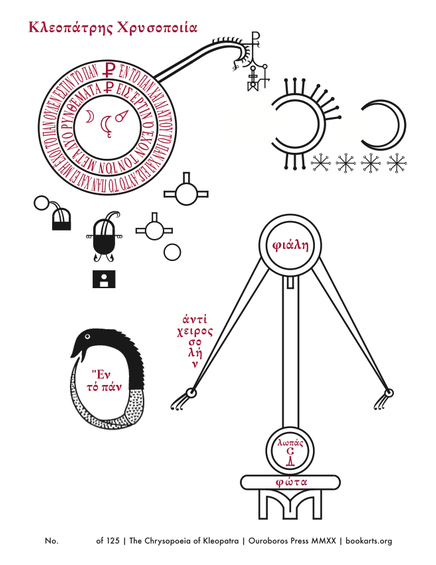
Chrysopoeia of Cleopatra, Chrysopoea of Cleopatra (n.d.)
This Chrysopoeia was interesting for many reasons, like the inclusion of the ouroboros, the snake that eats itself, or the possibility that it once rested momentarily in the Library of Alexandria, a place structured to encourage free inquiry, preservation of knowledge, and cross-cultural exchange (MacLeod, 2000), just before its decline. The people of these cities knew that there was less value in the generation of new ideas than in the accurate, reliable and democratic transportation of those ideas across time.
What the people of Alexandria did not know, was that today, like many before it, there were unseen forces working to prevent the democratisation of Truth, even if it meant burning the books (Ovenden, 2020).
1933, German Empire
We, men of this Government, feel responsible to German history for the reconstitution of a proper national body so that we may finally overcome the insanity of class and class warfare. We do not recognize classes, but only the German people, its millions of farmers, citizens and workers who together will either overcome this time of distress or succumb to it. With resolution and fidelity to our oath, seeing the powerlessness of the present Reichstag to shoulder the task we advocate, we wish to commit it to the whole German people.
We therefore appeal now to the German people to sign this act of mutual reconciliation. The Government of the National Uprising wishes to set to work, and it will work. It has not for fourteen years brought ruin to the German nation; it wants to lead it to the summit. It is determined to make amends in four years for the liabilities of fourteen years. But it cannot subject the work of reconstruction to the will of those who were responsible for the breakdown.
The Marxist parties and their followers had fourteen years to prove their abilities. The result is a heap of ruins. Now, German people, give us four years and then judge us (Facing History & Ourselves, 2016).
1945, Nazi Germany
The Nazis weren’t stupid, and it was important the people remembered. A much easier pill to swallow was an imaginary one, in which they were idiots or cartoon buffoons, but this wasn’t the case (Rees, 2012). Even when their actions seemed so ridiculous, so nonsensical that it was almost impossible not to attribute them to incompetence… It was crucial that the people documented how those performing these heinous acts were, at least once upon a time, a highly educated, upstanding and civil group (Rees, 2012). If this was done correctly, their actions would forevermore be accurately attributed to malice, or rationale twisted so far beyond recognition that it would appear alien to any outside of its gravitational pull, as it should.
While performing this imperative process of historical preservation, some of the people suddenly found themselves in a river. Forces, some beyond their control, and others beyond their sight or comprehension, pulled them left and right, slowing and speeding up their descent as they drifted downstream. Dangerous rocks could be seen ahead. They realised that they were all, no matter how hard they tried, going to hit multiple rocks on their way down. Others, seemingly on the shore, laughed as they descended. Later, those in the river realised, there was no shore.
The rise of Nazism was not a result of inherent character flaws but a consequence of ideas that had gained widespread acceptance in Germany prior to the war (Hayek, 1944).
Meanwhile, Soldiers of the People were finishing off the Nazis (Jander, 2020). Killing Nazis was undeniably satisfying, not unlike shooting a human-shaped spiritual infection with a machine gun, bullets hitting the glowing and pulsing organisms, which clearly indicated their status as targets and the soldiers' status as prophet. As they made their way deeper and deeper into the land of Nazis, a Squad of People found a storeroom half-destroyed by their rapid biological progression earlier that day, "The Walled Garden" painted across the few interior walls which hadn't yet caved in. It held one of the works of Emil Nolde, the Prophet.
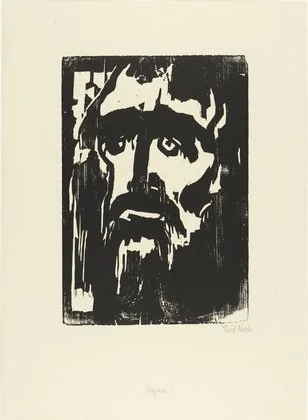
Emil Nolde, Prophet (1912)
One of the younger soldiers questioned aloud why the Nazis didn’t destroy the work, wondering why an organisation, who wanted to be the sole distributor of Truth, would also want to be the sole proprietor of all untruths too? A commanding officer told the young soldier it was too soon for a post-match analysis, while another under his command wondered whether “Proprietor” was a German surname.
Far to the north, near the Danish border, Emil Nolde, an artist who had thousands of his artworks confiscated in spite of his allegiance to the Nazi party (Artnet, no date), could be found secluded within his Seebüll estate, burning party membership cards, letters, gifts, and photos linking him to the Nazi regime.
1964, The West
An ex-Nazi scientist Dr. Strangelove must assist in the prevention of nuclear war after a mentally unstable American general orders a hydrogen bomb attack on the Soviet Union, triggering a path to global nuclear holocaust that a war room full of politicians and generals frantically tries to stop (Dr. Strangelove or: How I Learned to Stop Worrying and Love the Bomb, 1964).
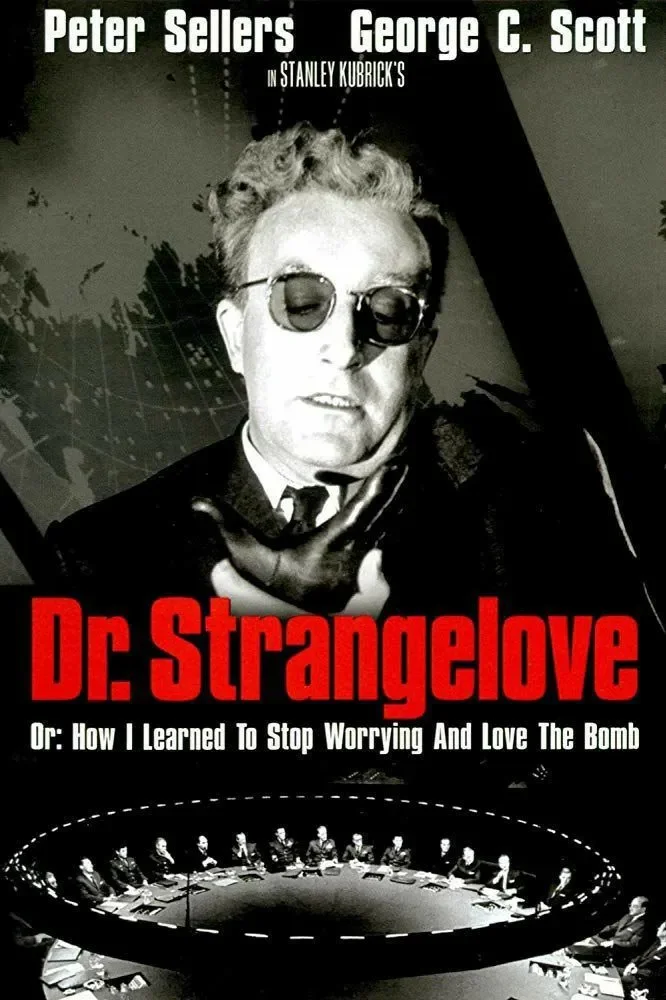
Dr. Strangelove or: How I Learned to Stop Worrying and Love the Bomb, Stanley Kubrick (1964)
The United States Government classified Operation Paperclip to avoid public scrutiny (Kulik, 2025), but before his allegiance to the The West was established, Dr. Strangelove was a member of the Nazi Party, overseeing projects that relied on forced labour from concentration camp prisoners. He was recruited by the United States Government during Operation Paperclip, and his nuclear weapon expertise was crucial during the Cuban Missile Crisis, although the events of the movie he was featured in were mostly fictional, and nuclear war was avoided in reality. His real name was never revealed, or anything regarding his work on Operation Necklace, but they say both classified documents were still stored somewhere inside The Walled Gardens.
1984, Island of Ireland
Broadcasters across the Island of Ireland have entered into a blackout strike. The workers are transmitting a programme bringing censored voices back onto the airwaves (Few Can See, 2023).

Few Can See, Frank Sweeney (2023)
There seems to be a malfunction of some kind however, as the source of the transmission appears to be incorrectly dated as "2023". The people can’t help but wonder what life will be like in "2023", and why such extreme action was required to access Truth in a non-Platonic republic (Popper, 1945).
1996, New York
The people watch in terror as New York burns, an event so strikingly symbolic of a larger vision just out of conscious reach that it seems to freeze time itself (FBI, no date). They wonder whether the spectacle at play is intentional, almost as though they were supposed to be here, witnessing this moment in real-time, wherever they were, alongside the rest of the world, in one final moment of unity before they’re splintered into millions of micro-communities housing micro-identities and micro-Truths. Time remained frozen for hours, as if preparing itself for the pluralisation of time to come. This event could not have occurred, as it did, at any other point in known history (Wright, 2006). Time returned to normal, they say.
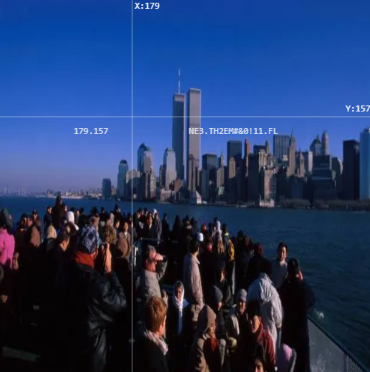
Tomorrow, Keith Mahony (TBD)
Meanwhile, far away from public awareness or discourse, work that started on a form of Artificial Intelligence functioning as a vast surveillance and control infrastructure was nearing completion (Tableau, no date). This system, the name of which was shortened to ART during this period of time, was now capable of monitoring global communications, financial systems, and political activity, consolidating the power of its investors to varying degrees. They say the system, designed to manipulate individuals, simulate historical events and perpetuate beneficial ideologies, curating the micro-communities, micro-identities and micro-Truths of the future, was a necessary evil for maintaining societal sanity in the 21st Century (Metal Gear Solid 2: Sons of Liberty, 2001).
2009, New York
ART had evolved into a far more active and manipulative force. The original network, which required human intervention, had been replaced by a layer of autonomous agents, executing overarching plans with minimal human intervention or oversight (Chun, 2016). Its purpose and role shifted from passive surveillance to society coordinator, influencing individuals and curating Truths (Metal Gear Solid 2: Sons of Liberty, 2001). It controlled and filtered information, deciding what knowledge each micro-community received via social media algorithms and recommendation systems, amplifying, suppressing and creating echo chambers where necessary to shape public perception as it saw fit (Bratton, 2016).
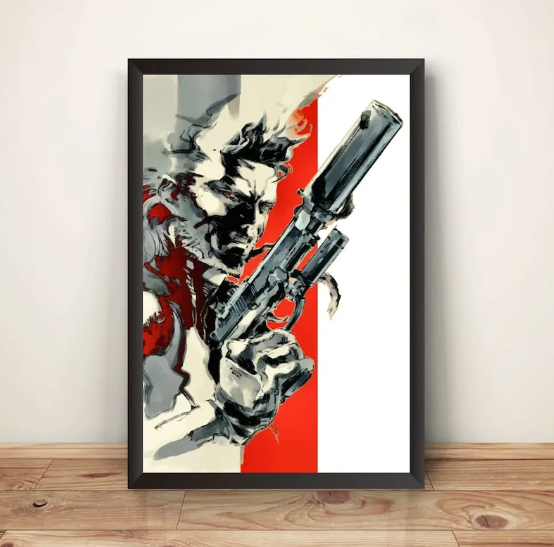
Metal Gear Solid 2: Sons of Liberty, KONAMI (2001)
This development came only a year after the introduction of the iPhone, which featured a full capacitive touchscreen operated by finger, a virtual keyboard, and a web browsing experience closer to a desktop. By combining phone, music, and internet capabilities into a single device, the iPhone appealed to tech-savvy consumers and early adopters rather than the traditional enterprise market. Its initial release in the U.S., exclusive to AT&T, limited broader adoption however, and the device carried a premium price, ranging from $499 to $599 with a contract (Seamgen, 2023).
2020, Unknown Location
Operation Necklace is declassified but heavily redacted.
2024, Earth
Rapid technological progression threatened to consume the world (Lane, 2025) via ART, a technology from long ago which had finally been revealed to the people publicly as a means of democratising their access to Truth (Ha, 2025), replacing all other forms of accessing Truth.
Meanwhile, technical progression of all kinds except technological had stagnated, as only the distribution of Truth had been truly democratised. The creation of Truth was returned to The Walled Gardens, patrolled by anti-cringe henchmen on behalf of the most powerful organisations and institutions in the world.
The people avoided cringe at all costs, because to be cringe was to pursue Truth and fall short, or to be wrong (Goffman, 1956), punishable by censorship, imprisonment or death, dependent upon how unironic the untruth was. There is no longer a place for wrong in a world where Truth has been obtained (Popper, 1945). Truth was held inside The Walled Gardens, they say, and all that remained outside were unscientific, unpatriotic, and anti-social ideas. Loyal citizens, beware (Blackford, 2012).
The people could receive Truth more easily than ever before, but some of them soon realised they could no longer seek Truth. To save themselves, some tried to learn the distinction. These lessons would take place in the distant mountains far away from The Walled Gardens. Their work there would not be pleasant or glamorous, but the harsh terrain would be necessary to relearn unironic speech and thought processes. Many would return before completing their transformation, but those who persisted slowly began to remember what it felt like to pursue Truth. Some people never returned from the mountains.
2029, Time Travel Exhibition
As any medium matures, it slowly lets go of technical perfection, progression, mastery and content algorithms in pursuit of Truth, or the sincerest possible exploration of It. Many people in 2029 assumed that the word technical referred to the use of computers, algorithms or machines of some kind. However, the word technical ultimately came from the root technique, which means these statements were no more or less relevant now than they were for Cleopatra the Alchemist, or the people of Alexandria. Which was good, because a lot of time had passed since then.
Some of the mountain people had returned to The Walled Gardens, which appeared taller and wider than they had left them. There was even more Truth held inside now, they were told by the necklaces of men and women gathered at the outskirts of The Wall, but the mountain people weren't sure whether the necklaces were capable of speaking ironically. The necklaces could not believe the magic they saw performed by the mountain people, who demonstrated, among many things, means of seeking and accessing Truth independently. Radical ideas began to circulate among them, unironically.
The necklaces of this brave new world (Huxley, 1932), led by the mountain people, took to capitalising ideas of significance, such subtlety going unnoticed by the anti-cringe henchmen, (necklaces who still believed value was unscientific) and thanks to this new private communication technology, the necklaces and the mountain people could think and communicate without fear of punishment, more accurately documenting and examining what and how their world truly was.
Examining their environment and its inhabitants within this new medium, the necklaces and the mountain people began to predict future events, running what they came to call a ‘thought experiment’ as a means of confirming the accuracy with they were perceiving the world. These experiments were wrong. Then less wrong. Then correct, sometimes. As they more and more accurately predicted future events, they found themselves performing more than ‘thought experiments’. They had discovered time travel. They wondered why then, if they could accurately travel forward in time, could they not use this technology to travel back in time?
They did, and what they found surprised them. Their observation technology seemed to malfunction, showing them entirely fabricated parts of history. The must be hallucinations, the necklaces assumed. They persevered however, now fully aware how beneficial wrong answers can be. Their persistence and continued exploration then revealed something shocking, a history more plausible than the one proposed by The Walled Gardens. They had unknowingly and accidentally unlocked the secret history of the world.
Radical ideas began to circulate among the people. Of kingdoms within, prayer and the painful pursuit of Truth.
Alexandria
The Time Travellers built great cities to house open-minded scientists and artists in search of Truth, a celebration of advancements socially and scientifically. Cleopatra the Time Traveller lived in the city of Alexandria during this time, one of my many remarkable periods in its history. She was one of four Time Travellers who worked on producing the famous Philosopher's Stone, and some of her most precious discoveries are included in the mysterious Chrysopoeia of Cleopatra.
Chrysopoeia of Cleopatra, Chrysopoea of Cleopatra (n.d.)
This Chrysopoeia was interesting for many reasons, like the inclusion of the ouroboros, the snake that eats itself, or the possibility that it once rested in the Library of Alexandria, a place structured to encourage free inquiry, preservation of knowledge, and cross-cultural exchange. The Time Travellers once again came to understand there was less value in the generation of new ideas than in the accurate, reliable and democratic transportation of those ideas across time. Something didn't feel right, however.
No matter how hard they tried to recreate them, the cities felt different to what the Time Travellers had observed in the past. Ideas of the mountain people, forged during their ascent of the harsh mountains far away from what remained of the ruined Walled Gardens, had been inscribed on new, silent necklaces which many of the Time Travellers now wore: "ἕν τὸ πᾶν, hen to pān".
What the people of Alexandria could feel, were the unseen forces working to prevent the democratisation of Truth, even if it meant burning the books.
The Time Travellers suddenly found themselves in a river.
